
Share this article
https://www.wechoosethebear.club/the-den/emergency-contact
Who's Your Emergency Contact?
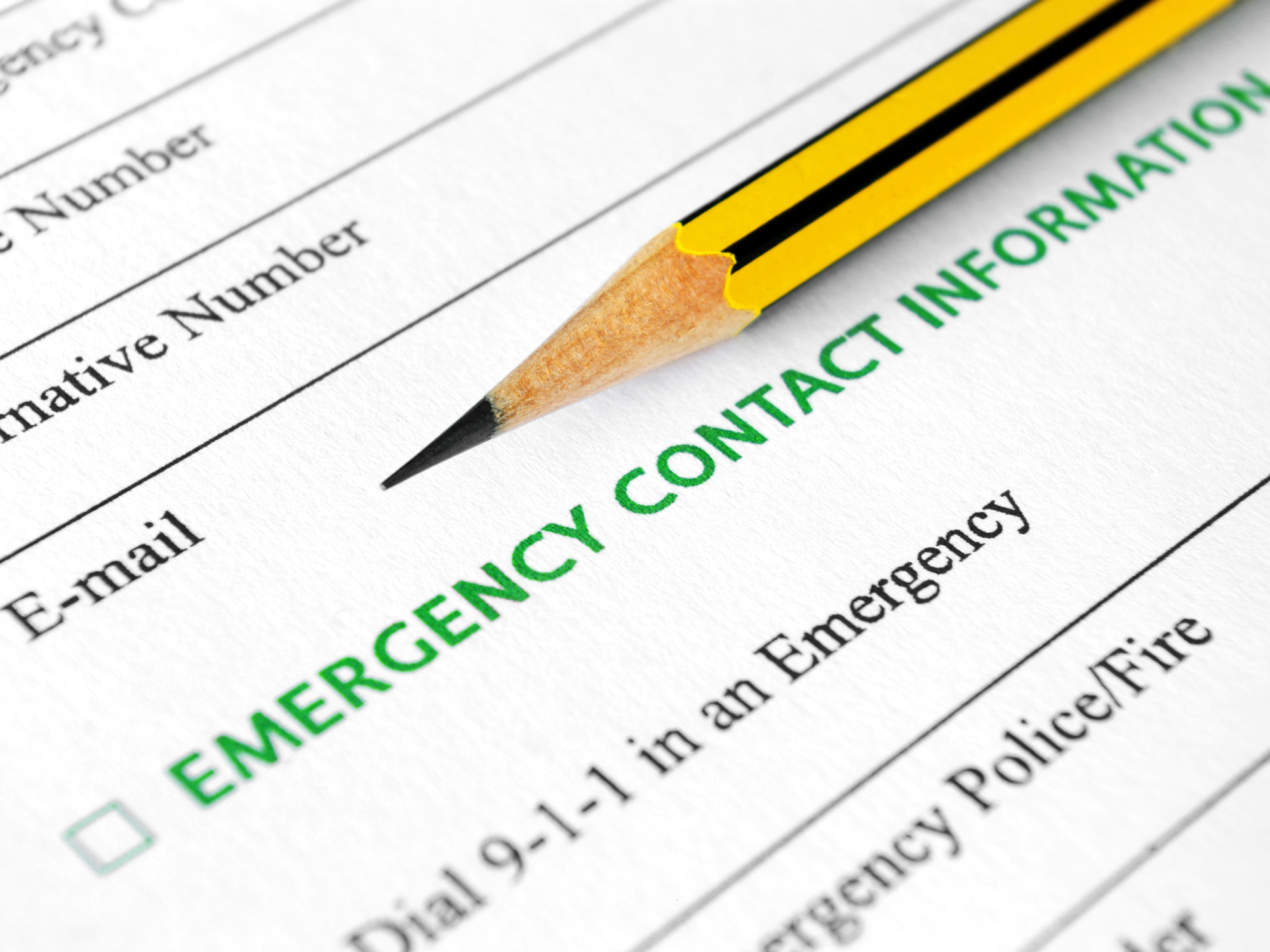
The form asks for one name. The real answer is a plan.
There's a moment every single woman knows. You're at a new doctor's office, sailing through the clipboard, name, address, insurance, and then the form stops you cold: Emergency contact. The married women write a name without thinking. You sit there doing math. Your mother is 80. Your sister is in Phoenix. Your best friend would come, but does she even know your birthday, let alone your blood type?
Here's the thing nobody tells you: that blank line is not really asking for a name. It's asking a much bigger question, and answering it properly is one of the most powerful things a woman running her own life can do. So let's answer it properly. All of it: who to call, who decides, where the passwords live.
First, what an emergency contact actually is (and isn't)
This part surprises almost everyone. An emergency contact is the first person medical personnel will get in touch with in an emergency, but your emergency contact may not have the legal authority to act on your behalf unless you explicitly provide that power. An emergency contact can answer questions and contact other people for you, but unless there is some legal relationship between you, they won't have the authority to direct what kind of medical treatment you should or should not receive.
Let that land: the name on the form gets a phone call. That's the whole job. If you want someone to have an actual say in your care, that takes paperwork, and if you don't do the paperwork, the decisions default to "next of kin," which the legal system defines by blood and marriage, not by who actually knows and loves you. Traditionally, healthcare providers have turned to the next of kin for decision-making. For a single woman, that could mean an estranged brother outranking the best friend who's had a key to your house for fifteen years.
And don't picture some distant someday. The American Bar Association's Commission on Law and Aging studied exactly this scenario with hospital physicians: a patient arrives non-responsive, no advance directive, and family members disagree about care. Scenarios like this are increasing in frequency; converging demographic trends increasingly make the question of who decides if the patient cannot central to medical practice. Advance care planning is not just about old age. At any age, a medical crisis could leave someone too ill to make her own healthcare decisions.
"The emergency contact line gets a phone call. The paperwork gets a vote. Do both."
The paperwork: two documents, one afternoon
According to the National Institute on Aging, the two most common advance directives for health care are the living will and the durable power of attorney for health care. Here's what each does:
1. The healthcare proxy (durable power of attorney for health care)
This is the big one. It's a legal document that names your health care proxy: a person who can make health care decisions for you if you are unable to communicate these yourself. The Mayo Clinic's guidance on choosing this person is blunt: even if you have other legal papers about your care, you can't anticipate all situations ahead of time, and in some situations, someone will need to decide about your likely care wishes. Pick someone who will be available if needed and who will decide matters the way you would decide. Not the person you love most. The person who can hear "no heroic measures" and hold the line while crying. Those are sometimes different people.
2. The living will
A living will tells doctors how you want to be treated if you cannot make your own decisions about emergency treatment. You can say which common medical treatments you would want, which ones you'd want to avoid, and under which conditions each choice applies. The American Heart Association notes these documents can address whether you want artificial respiration, dialysis, tube feeding, or to donate an organ, and may include a do-not-resuscitate order. Cheerful reading? No. But it means the decision gets made by you, at your kitchen table, instead of by a stranger or a committee of relatives at your bedside. It helps avoid disputes among family members and gives direction to health care professionals about the level of care to provide.
Getting these done is not a lawyer-and-four-figures project. You can contact your health care professional or an area hospital; you may want to contact an attorney, although this is not required. Many organizations, including the National Hospice and Palliative Care Organization, provide state-specific advance directive instructions and forms. Laws vary from state to state, so use your state's form. And revisit it: Mayo Clinic suggests checking your directives about every 10 years, since over time your thoughts about end-of-life care may change.
The phone: five minutes, tonight
Paramedics can't read your mind, but they can read your lock screen. Having your emergency contact and medical information in your smartphone can help emergency responders quickly identify your next of kin and obtain important medical information that could help save your life.
- •
iPhone: open the Health app, tap Medical ID, tap Create Medical ID, and make sure Show When Locked is turned on. Add conditions, medications, allergies, and your people.
- •
Android: open Settings, tap User & Accounts, then Emergency Information (menus vary by phone).
- •
One pro tip from the medical folks: if you have no known allergies and are not taking medication, it still helps to write "none" so that medical personnel don't assume you've overlooked these fields.
Then test it. Lock your phone, wake it without unlocking, tap Emergency on the passcode screen and confirm your Medical ID appears. If you can find it, so can a paramedic.
The passwords: your life has a hundred locked doors
Now the part everyone skips. If something happens to you, the people helping you will need to pay your bills, reach your accounts, and stop the subscriptions. They mostly can't. Big Tech and other companies won't hand over your data or passwords, even to a spouse, without a hassle, if at all. One writer who lived it after his father's sudden death describes the aftermath: a Gmail account the family couldn't access, a bank that required death certificates, probate documents and three forms of ID in person, and a Netflix subscription that kept charging his mother's card for four months. His father had about 30 accounts. The average person today has around 100.
The fix is a password manager with an emergency access feature. Services like 1Password, Bitwarden, Dashlane, and LastPass offer Emergency Access features: you designate a trusted contact, specify a waiting period, and if you don't respond, access is granted. It works like this: if your contact ever requests access, the app sends you an alert; if you're fine, you hit Deny. Alive and well? Nothing happens. In the ICU? Your person gets in. Bitwarden's version costs about $19 a year. That's the price of two lattes for a skeleton key you control.
Round it out with the built-in tools: on iPhone, go to Settings, tap your name, then Sign-In & Security → Legacy Contact; on Google, search for Inactive Account Manager in your account settings, choose how long Google should wait, and add people to be notified and choose which data they can download.
So… who?
The honest answer for many of us: it's a team, not a person. The friend twenty minutes away is the phone call. The level-headed sister is the healthcare proxy. The organized friend is the password contact. Nothing says one name has to do every job, and for single women, splitting the roles is usually the strongest design.
What you can't do is leave it blank. Because blank doesn't mean "no one decides." Blank means the state decides, using a next-of-kin flowchart that has never met you.
The "Who's Your Person?" checklist
- •
Name an emergency contact everywhere the form asks, and tell her she's it
- •
Set up your phone's Medical ID / emergency info, visible from the lock screen, and test it
- •
Complete your state's healthcare proxy form and give your person a copy
- •
Complete a living will so your wishes are written down, not guessed at
- •
Put your passwords in a manager and set an emergency access contact
- •
Set your phone's Legacy Contact and Google's Inactive Account Manager
- •
Make an ICE sheet: documents, accounts, insurance, where the spare key lives, and tell your person where it is
That last item has a head start waiting for you: the Solo Financial Independence Starter Kit in the member vault includes a printable ICE page and a five-box document checklist. And the June Girl Dinner is literally titled "Who's Your Person?". One dinner to choose, name, and brief her. Bring wine. This conversation goes better with wine.
The married women write a name without thinking. You're going to do something better: build a plan with your eyes open, pick your people on purpose, and put it in writing. That's not the sad version. That's the grown-up version.
Sources & Citations
Nolo, "Choosing an Emergency Contact: It Matters" · National Institute on Aging, "Advance Care Planning: Advance Directives for Health Care" · Mayo Clinic, "Living wills and advance directives for medical decisions" · American Heart Association, "Advance Directives: Making Crucial Health Care Decisions Before an Emergency" · American Bar Association Commission on Law and Aging, hospitalist focus group on surrogate decision-making · Main Line Health & Allina Health, ICE / Medical ID setup guidance · FindLaw & Murray Plumb & Murray, digital estate and password manager emergency access.
Pick your person at dinner.
The "Who's Your Person?" Girl Dinner walks the whole club through this, together. Members also get the Solo Financial Independence Starter Kit with the printable ICE page.
See Membership
Vicky Townsend
Founder & Fellow Bear